Named for what they sell
Goods become Products and Product Orders. Services gain Appointments and Calendar. Events get Tickets, Attendees and Check-ins. A merchant selling in more than one way gets each relevant group.
Commerce
Intelligence
Infrastructure
 Why institutions choose Box
Keep the brand, records, rails, and merchant relationship.
Why institutions choose Box
Keep the brand, records, rails, and merchant relationship.
Start here
By merchant activity
By deployment
 See it running
OlivePay licensed Box. The tills are already in the field.
See it running
OlivePay licensed Box. The tills are already in the field.
Your staff and your merchants run the whole business from one admin app. What each merchant sees is generated from what they sell, what their products can do, and what your deployment includes.

The app fits the trade
There is one route tree in the codebase. Intent gives its shared routes the names a merchant expects, product behaviours narrow what appears, and installed capability removes anything the engine cannot serve.
Goods become Products and Product Orders. Services gain Appointments and Calendar. Events get Tickets, Attendees and Check-ins. A merchant selling in more than one way gets each relevant group.
Shipping appears when something is shippable. Availability and resources appear for bookable products. A route whose backing package was never installed is absent, not disabled.
The same console works on a phone behind the counter and a laptop in the back office, on your domain and carrying your institution’s brand.
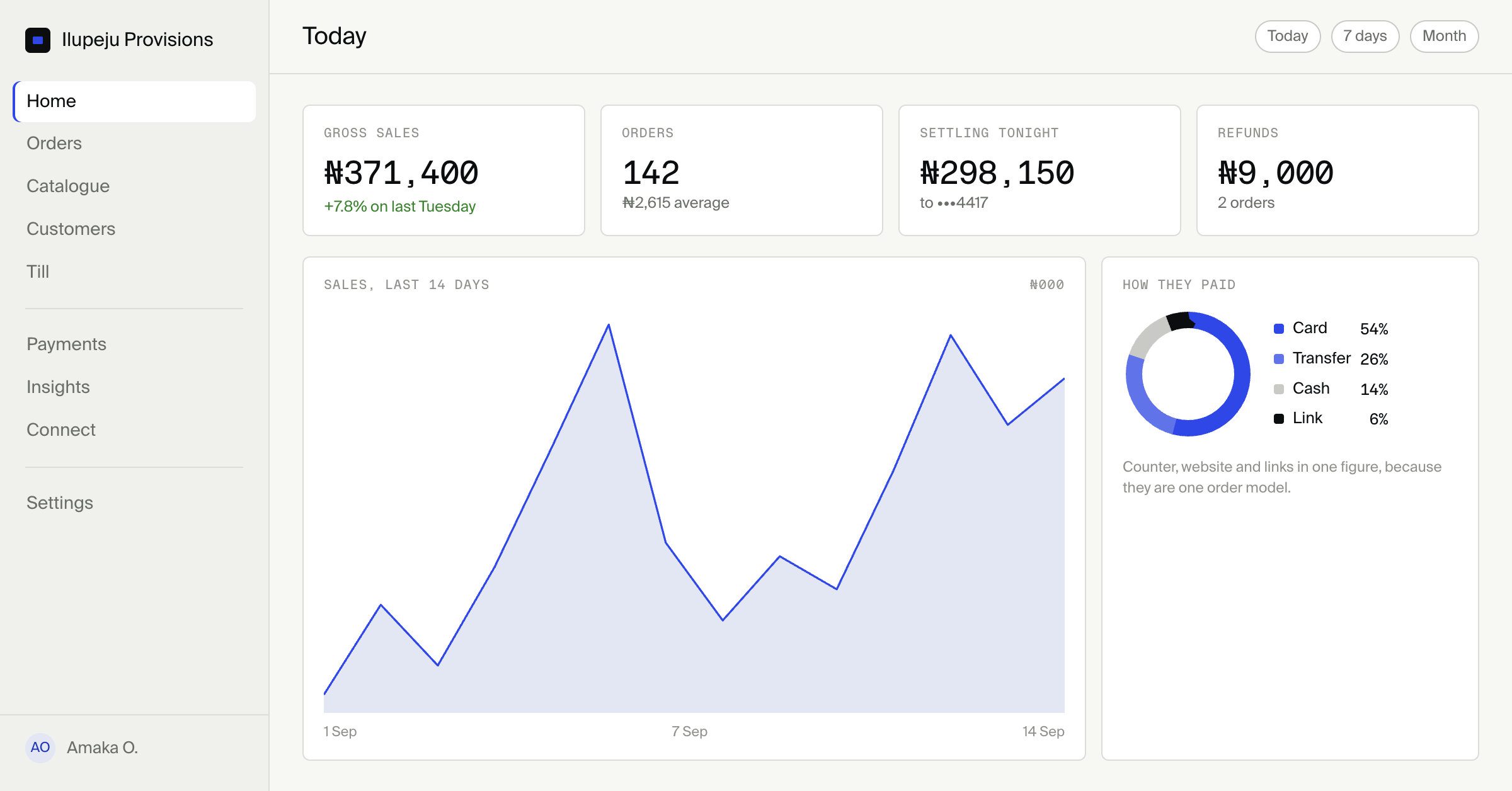
A day in the console
Orders awaiting action, recent payments, and current business activity appear before the catalogue of every possible platform feature.
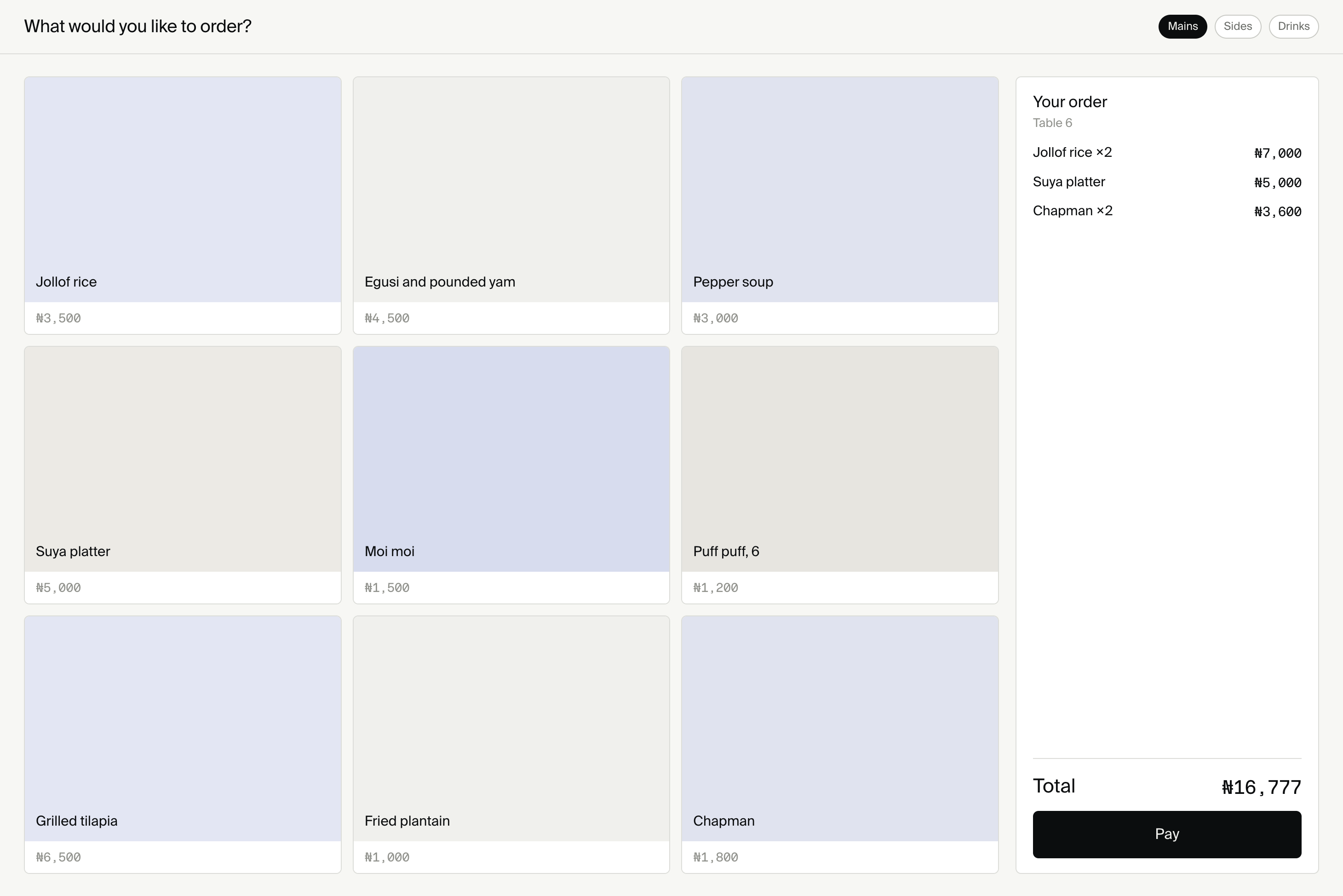
A counter sale, website order, or invoice opens with its customer, lines, payment state, and fulfilment work attached.
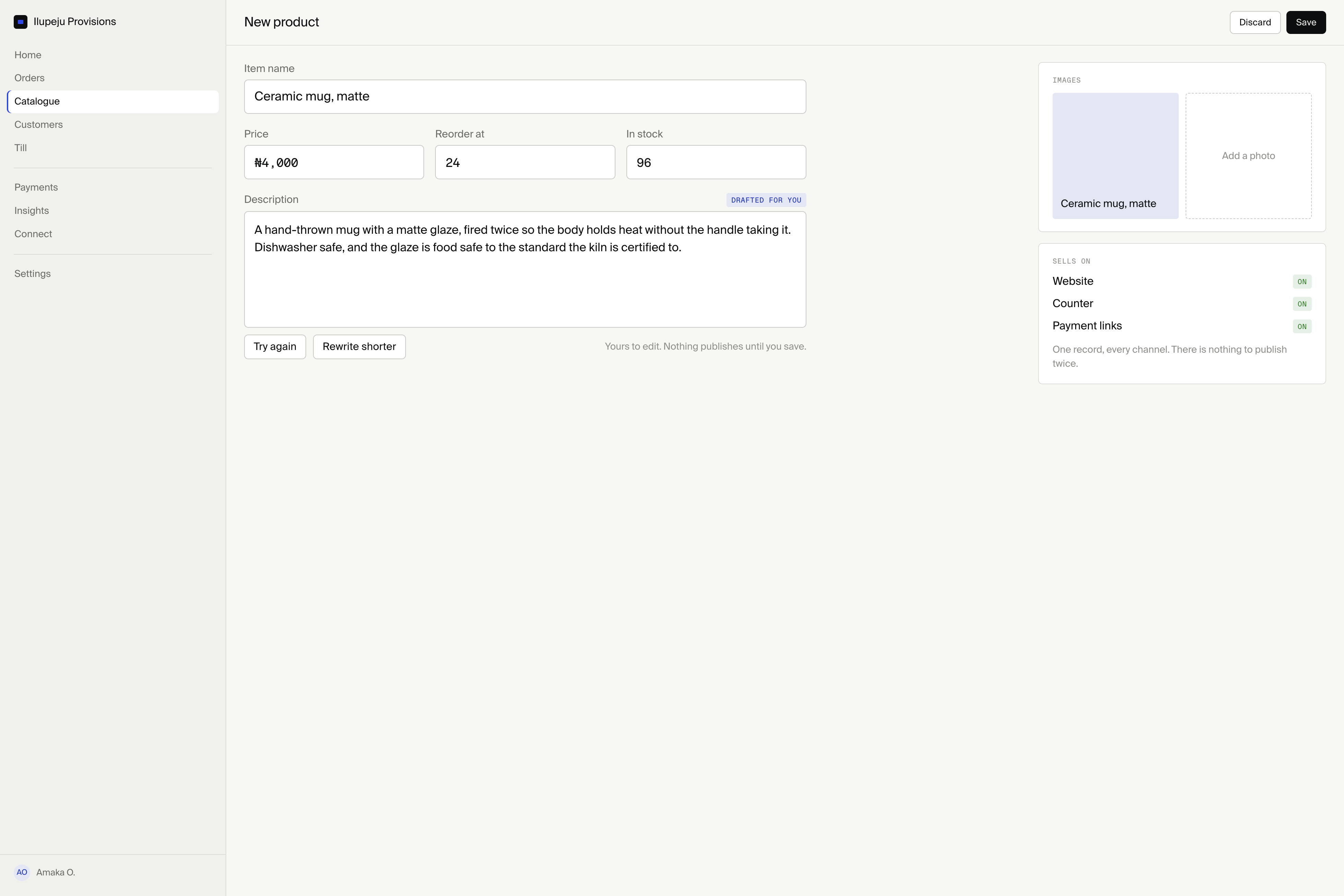
Managers maintain products, prices, stock, locations, and staff access. Installed packages decide which fields and routes exist.
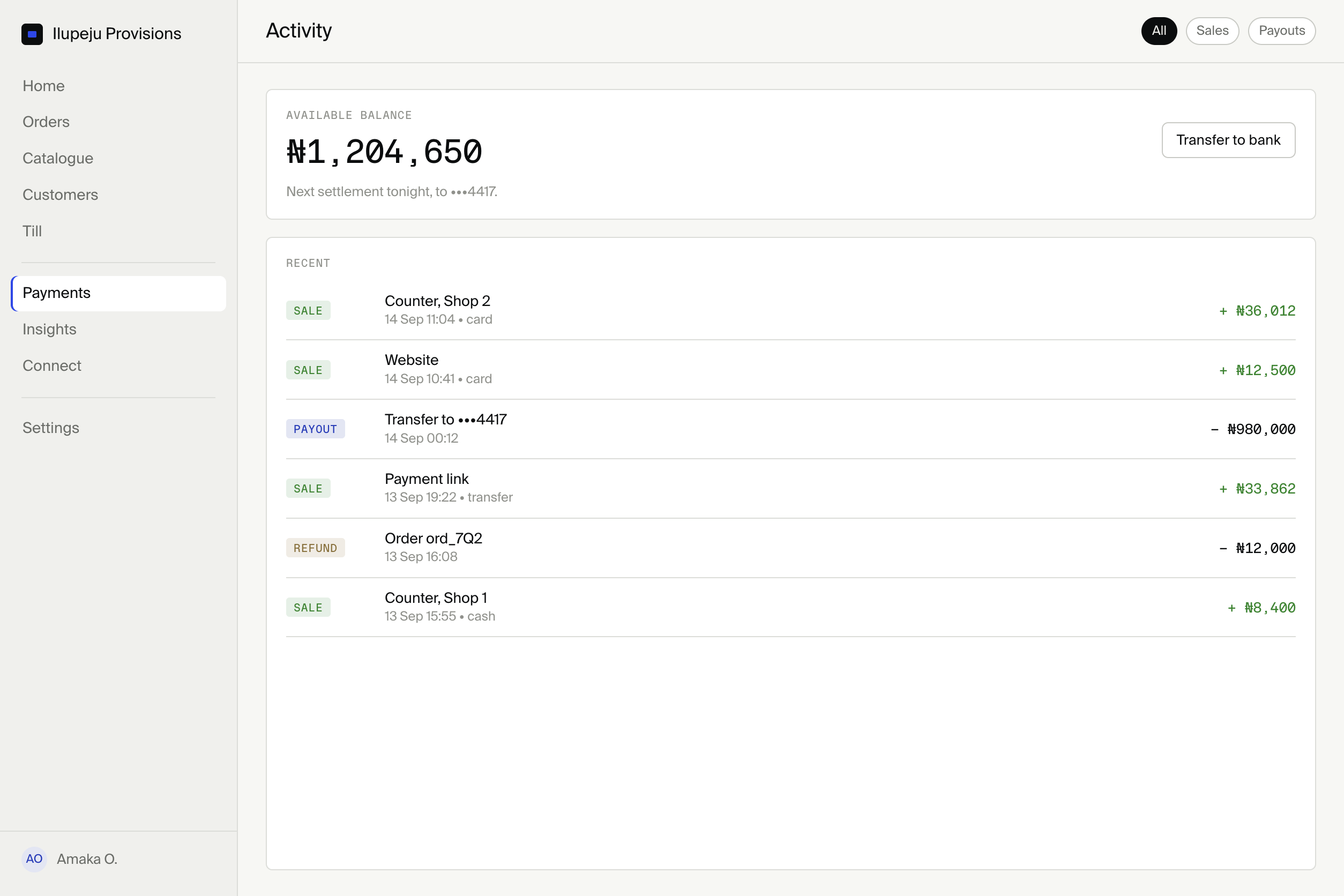
An institution support role can open the same merchant and operational context while merchant only and institution only controls stay separate.
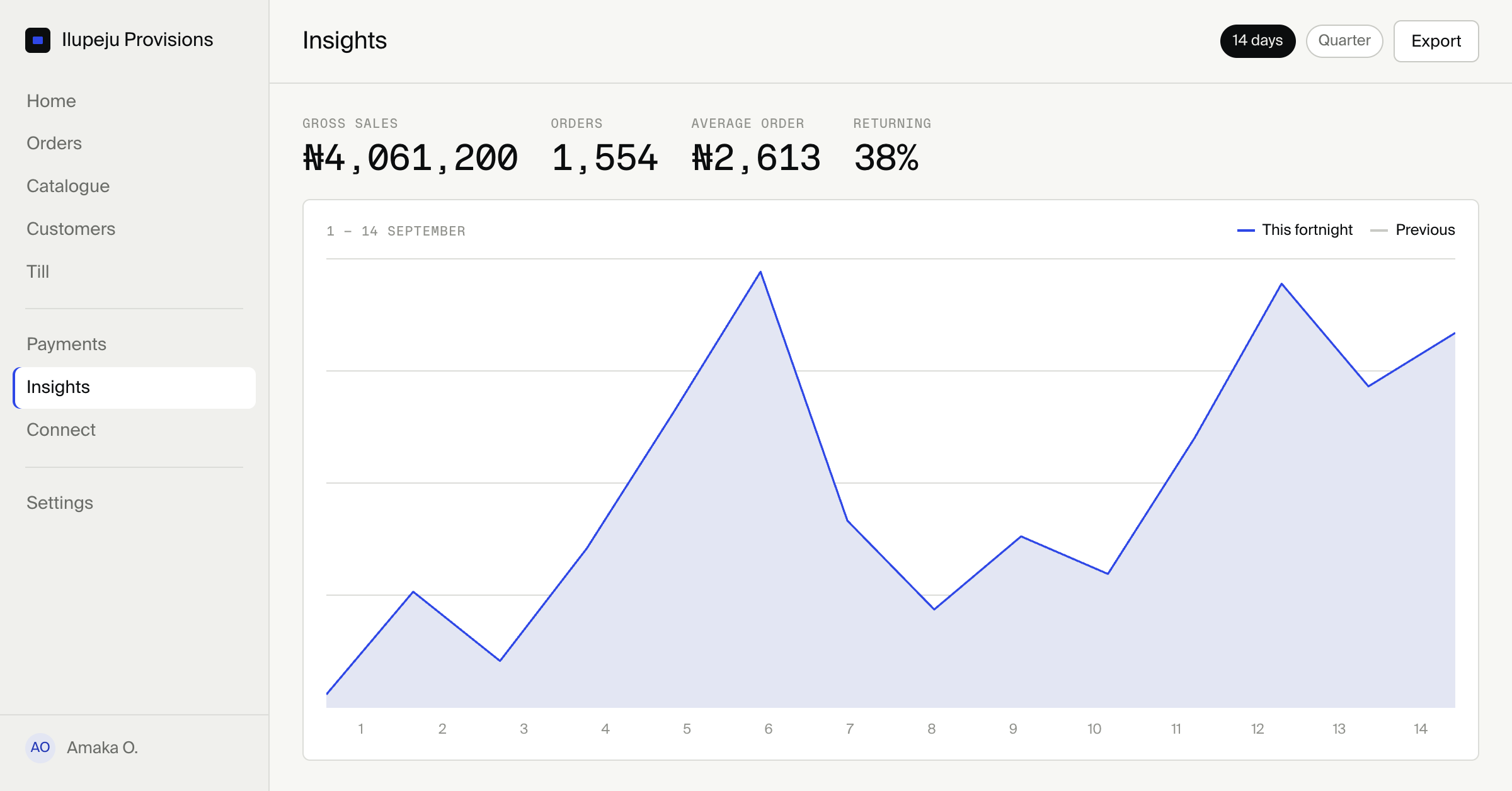
Reporting reads the Commerce Engine directly, so the team does not compare separate counter and online totals before closing.
One record, every channel
A web sale, a counter sale and a payment link resolve to the same order against the same customer. The console is a surface on the Commerce Engine API, so there is no second database to reconcile.
“The merchant sees a console shaped around their trade. Our support team sees the same thing, with the right access, and works from the same records.”
Built for institutions that own the merchant relationship
Staff and access
A merchant adds their own people and assigns roles against the routes their business actually generated.
Institution-side roles work in the same console, so field and support teams can help without a second tool or copy of the data.
Each till session joins the staff member, enrolled device, location, and sales completed while that person was signed in.
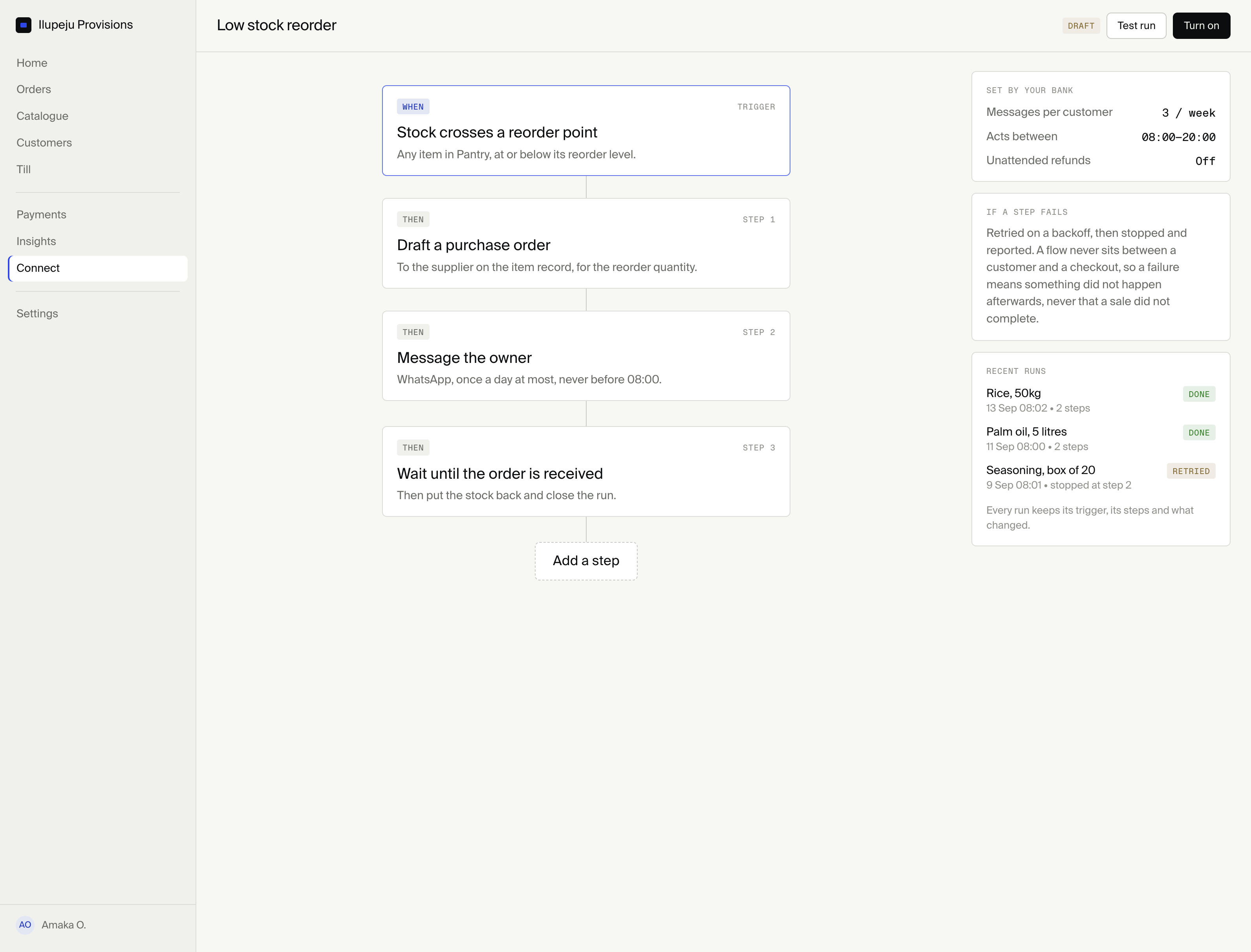
Connected by design
Connect flows, the merchant website and Retail Rails all read and write the same engine records. Merchants can automate follow-up, sell online and take payment at the counter without learning another system.
Explore Connect Explore in person payments