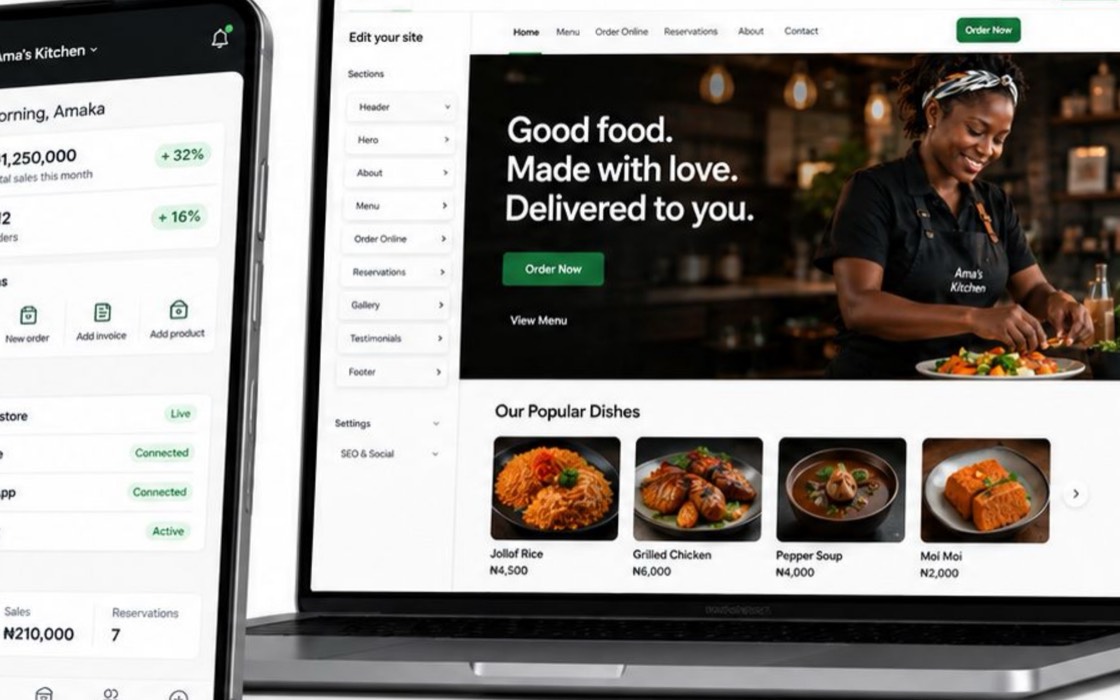

Build vs Buy: Commerce Infrastructure
The decision institutions eventually have to make.

Commerce is strategically important enough that many institutions eventually face a decision: should we build the infrastructure ourselves, buy an existing platform or use composable infrastructure?
There is no universal answer. The right choice depends on control, speed, engineering capacity and strategic importance.
Build
Building internally provides maximum control. But an institution is not only building a website. It may need:
- Product infrastructure
- Order management
- Customer management
- Payments
- Transactions
- Merchant management
- Multi-tenancy
- APIs
- Webhooks
- Point-of-sale infrastructure
- Analytics
- Deployment systems
- Upgrade mechanisms
The visible product is only the surface. The infrastructure underneath is the real project.
Build
- Maximum control
- Maximum engineering burden
- The infrastructure is the real project
Buy
- Fastest start
- Least control
- You inherit their data model
Compose
- Infrastructure and control
- Faster path to production
- Room for what you build next
Buy
Buying a complete commerce platform can reduce initial development time. But the institution inherits the platform’s architecture, product decisions, data model, deployment model, integration constraints and user experience.
This can be appropriate when commerce is peripheral. It becomes harder when commerce is strategically important.
Compose
Composable infrastructure sits between the two. The institution doesn’t build every primitive. It also doesn’t surrender the entire experience to a third-party application.
Instead, it uses infrastructure that provides the underlying commerce capabilities while the institution decides how those capabilities become a product.
The decision framework
Five questions, in the order they usually matter.
- How strategic is commerce? If commerce is core to the institution’s future, control becomes more important.
- How quickly do you need to launch? If speed is critical, infrastructure can shorten the path.
- How much engineering capacity do you have? Building everything internally requires sustained platform ownership.
- How much differentiation do you need? The more unique the experience, the more important composability becomes.
- Where does the system need to run? Deployment and infrastructure requirements can eliminate certain options.
The real question
The decision isn’t simply build or buy?
Which parts of commerce should become our infrastructure, and which parts should we outsource?
That is the more useful question for institutions.